
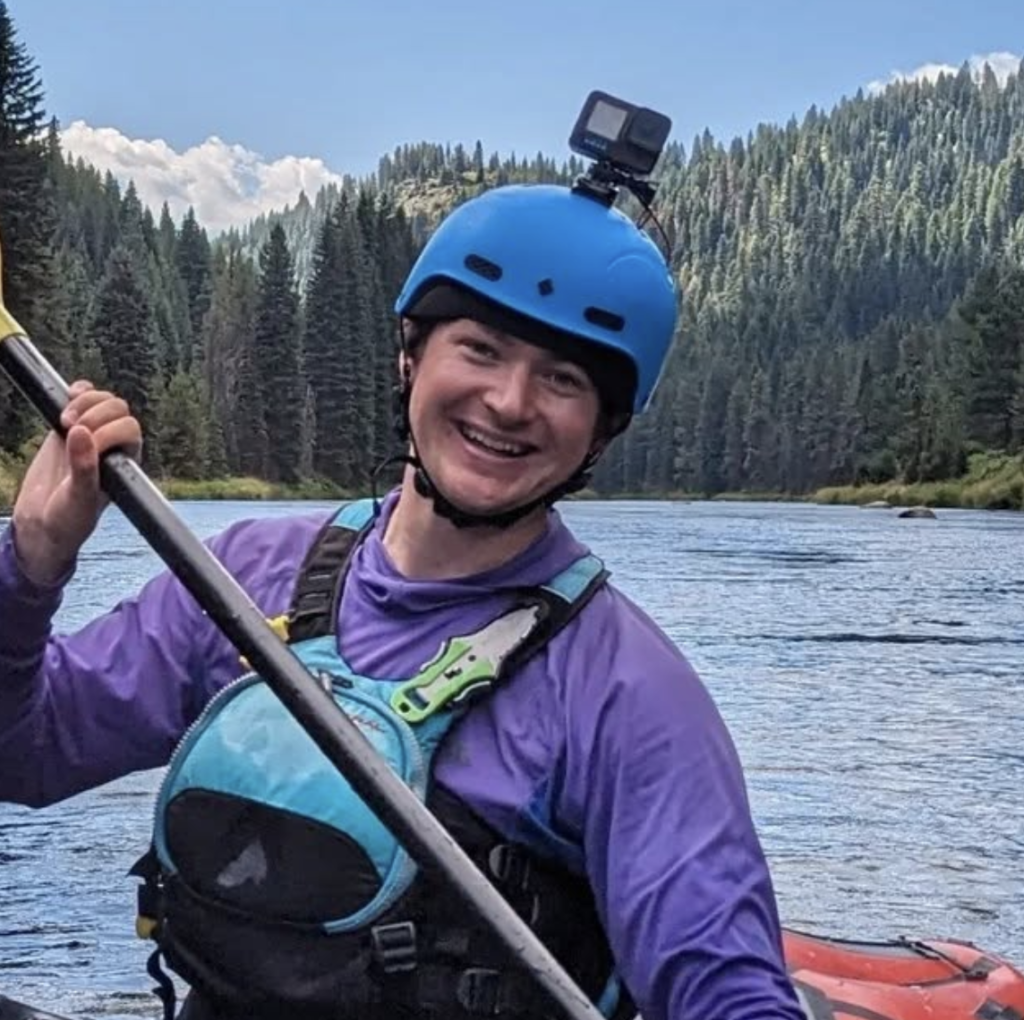
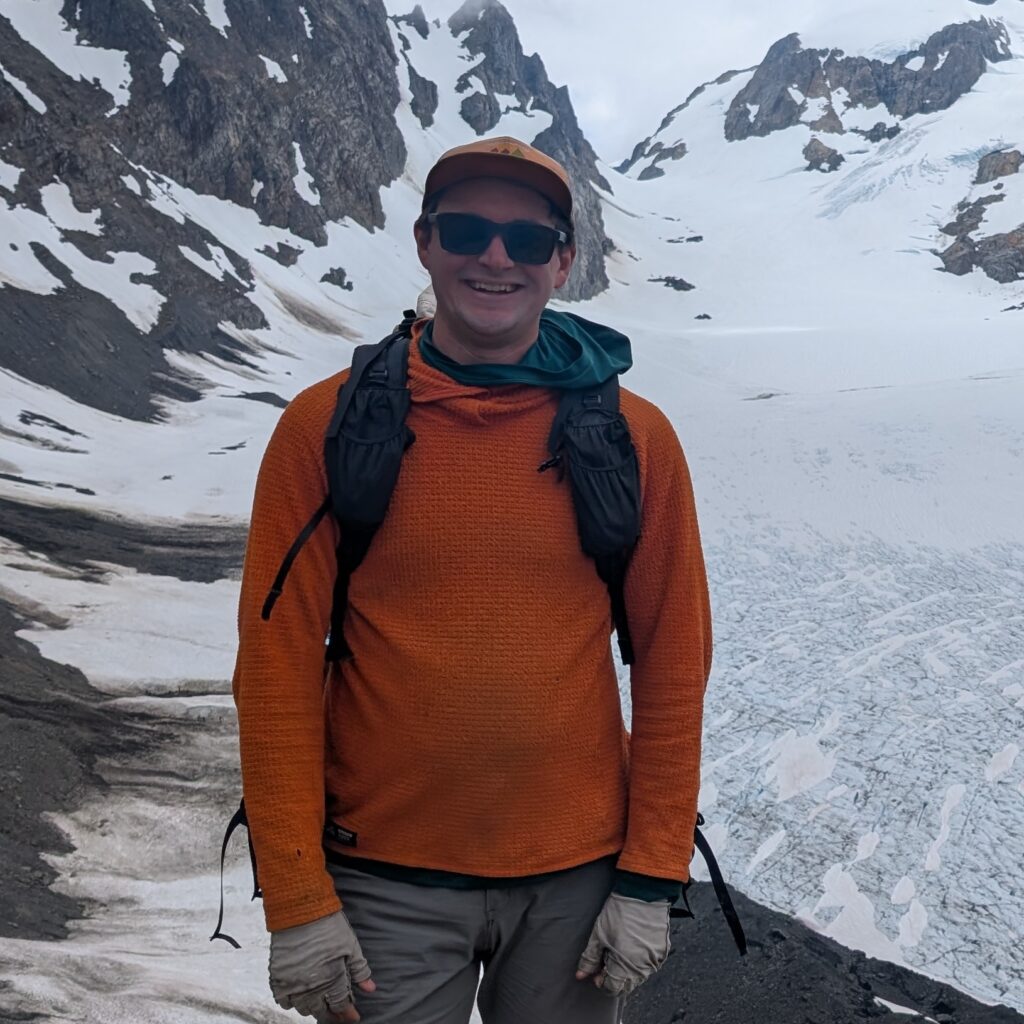
meet our newest guide, Landon sawaya
- What was your first river experience, and what hooked you?
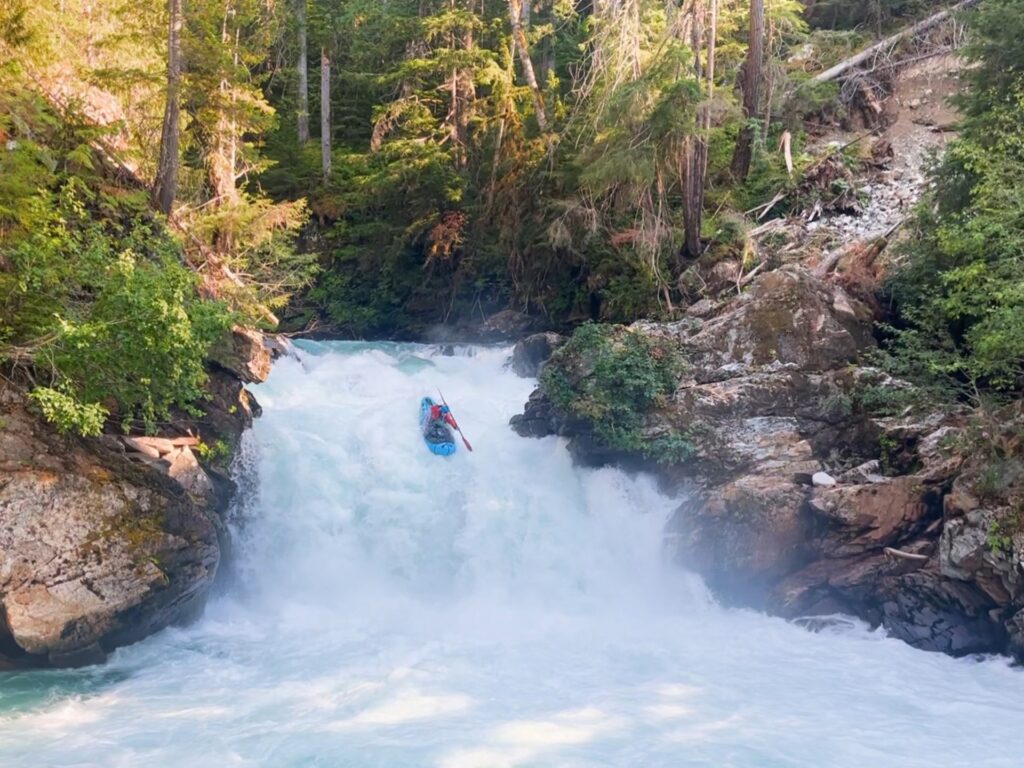
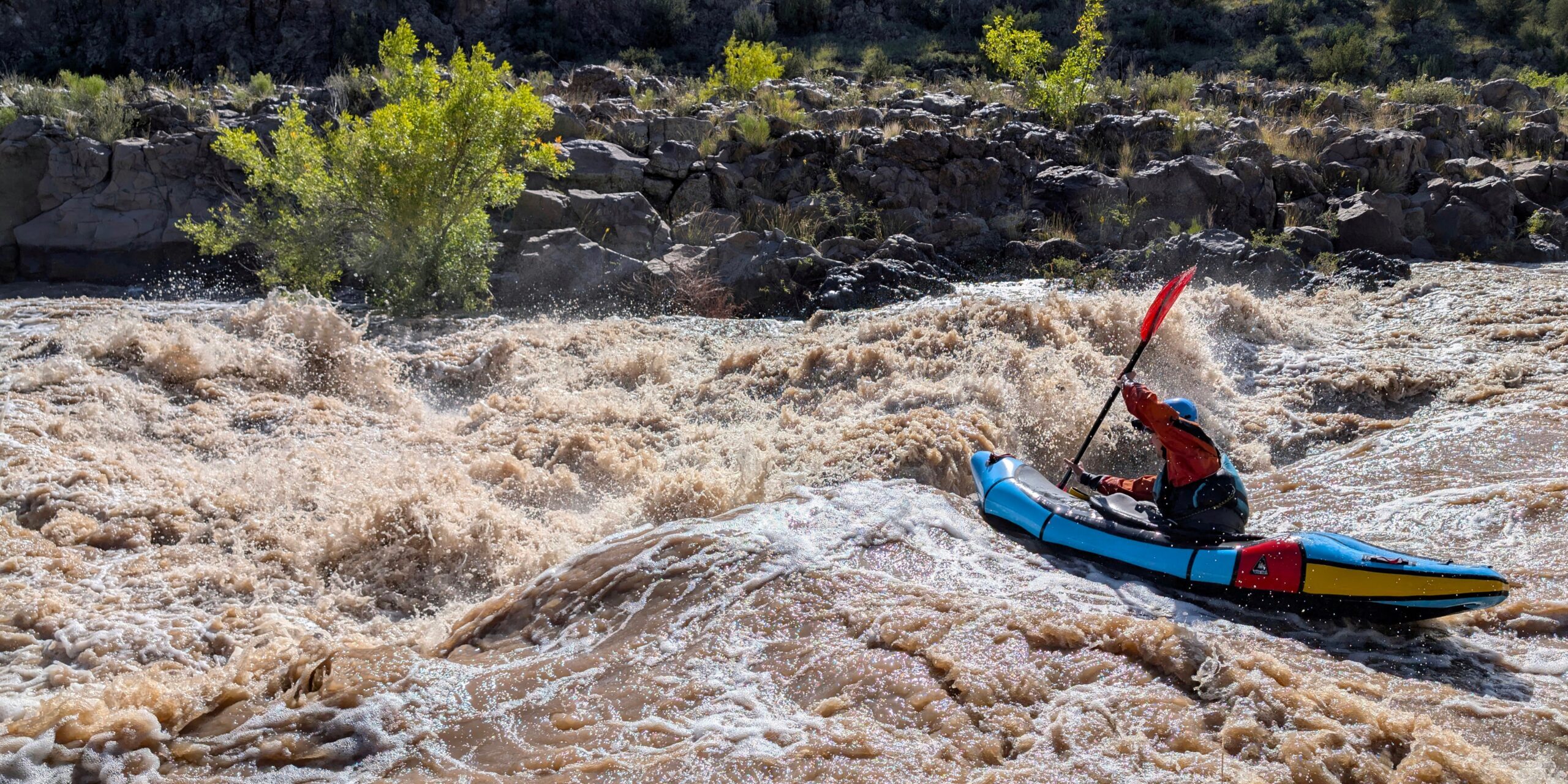
My first time on a river was in 2018 near the end of college. It was a five-day Lower San Juan trip – an excellent beginner river. Our group of four used budget tandem duckies and had a lovely time swimming, hiking, camping, and navigating through the modest rapids. I continued to dabble in river travel and eventually picked up a light packraft for Grand Canyoneering, but I can’t say I was truly hooked until 2022 when I got an Alpacka with thigh straps. I immediately felt addicted to the feeling of making the boat lean with me – this is when I realized packrafting could be a sport, not just an activity.
- You mentioned getting good instruction early was pivotal — who taught you, and what made it stick?
In 2021 I read Luc Mehl’s Packraft Handbook cover-to-cover, probably even twice. This helped me understand many important concepts like gear management, river features, and paddling technique. Luc emphasized the importance of getting in-person instruction in a Swiftwater Rescue class. I had already convinced a few friends to sign up for a generic course with me, but when I saw a Packraft-Specific Rescue Training course posted by Four Corners Guides, taught by Dan Thurber, I immediately reached out SSI and begged them to let us switch. I had recently become aware of Dan’s role in the progression of whitewater packrafting and knew this was an opportunity to learn from the best. I was right, and I felt even luckier when Jeff Creamer showed up as co-instructor! I was struck by Dan’s competency as a teacher – he wasn’t just a badass paddler but also had a background in education, and I could tell he put great intention behind how he explained river-running concepts. I also loved that the course focused on developing good boat handling skills as a way to prevent accidents. Learning how to rip hard eddy turns and surf laterals in the name of safety? That was rad!
- How did you go from student to wanting to teach? Was there a specific moment?
For the next few years I prioritized paddling and spent a lot of days on the water—from playful day trips to long adventures. Throughout my packrafting career, my primary job has been as a backpacking guide. I fell in love with working outside with people – helping them learn about their environment by empowering them to have cool recreational experiences. In 2025 I finally felt like I pulled ahead of the curve in my own paddling competency – unlocking the combat roll, always looking for spicier lines, and planning wilder trips. I found myself constantly eager to help friends develop their skills – organizing roll practice in the pool, finding good surf waves to share, giving feedback on peel-out technique. I was ready to add paddlesports instruction to my career, so in 2026 I decided to take some instructor courses and get started!
Landon’s style and approach
- What do you think makes a great first day on the water for a beginner?
I think it’s ideal to match the river character and pace of the day to their skillset and mindset. I’d like to start beginners in a flatwater environment to practice basic paddle strokes and get familiar with the boat. Then work in some good waves and eddies. Basically it’s important that they feel safe enough to push themselves, but challenged by the opportunity to engage with new river features. This all looks different for different personality types! Some beginners need a thrill to get hooked, some need to feel peace.
- What’s the most common thing you see new packrafters struggle with, and how do you help them through it?
Beginners and experienced boaters alike can struggle with self-rescue/wet re-entry. This skill came easily to me because my body type is privileged for it, which has greatly benefited my paddling. But, I’ve spent hours trying to discover nuanced techniques that make it feel easier – both to make my own recovery more reliable, and to help others troubleshoot their process. As packrafting has developed a culture of safety, self-rescue is often referred to as “essential”, “fundamental”, and “required for whitewater”. I think the people who refer to it that way have a relatively easy time with it. I watch some beginners self-rescue on the first try, while others (using the same technique) have to fight their way back into the packraft, ask for help, and finish exhausted. I like to remind this latter group that it’s okay to need help. The reason we paddle in groups is so we can help each other out, right? My goal is to teach packrafters good paddling technique and trip planning skills to reduce their number of swims. Then, with the right team, someone who struggles with wet re-entry can still become a great paddler.
- How do you think about safety without making it feel scary for newcomers?
Control of the environment is the best way to create an underlying element of safety. I could take beginners to a Class III rapid and warn them about all the things they need to do to stay safe – hit the right line, swim down to escape holes, hold onto all your gear, and keep your feet up – “or else”. That’s too much negative information at once. Packrafting is supposed to be fun! I’d rather just start on Class I, build some confidence, then move to Class II, introduce a few more safety concepts, and maybe eventually run that Class III when people are ready.
Landon’s life and personality
- You’re clearly someone who does a lot of different activities outdoors. How does all of that feed into your time on rivers?
I’ve fallen much more in love with river travel than I would’ve predicted! I used to see myself as more of a cardio and endurance sport guy. – hiking, running, biking, and backcountry skiing. Then, I started hiking off-trail and canyoneering, and I discovered a passion for exploring undeveloped landscapes. But I’ve found that ropes and heights scare me in a way I don’t enjoy. River corridors feel more wild and natural than trails, and whitewater gives me the speed and technicality of mountain biking. It’s the perfect combination! I have also learned that getting wet is the best way to cope with summer heat!
- What does a perfect river day look like for you?
Waking up at a backcountry campsite, finishing the hike in, paddling engaging whitewater for the afternoon, and camping by the river! It doesn’t have to be hard, demanding paddling for me to feel fulfilled. I enjoy every grade, as long as I’m in an interesting landscape!
- What river or route is on your bucket list right now?
So many, but an Animas-Vallecito linkup is a big priority!
The “pay it forward” angle
- You mentioned wanting to pay forward the instruction you received — what do you hope students feel or take away from a course with you?
I really believe in packrafting – it’s changed my life. I don’t think I would’ve become an avid river lover if large rafts were the only option. In a lot of ways, I see it as the future of river travel and I want to help shape that future. I don’t care if my students go on to become class IV paddlers – I just want them to feel empowered to plan trips that are interesting to them. If my students go on to feel confident enough to lead their friends on a Lower San Juan trip, check out underexplored Class I sections of their home river, or paddle hard, hike-in whitewater in Alaska, I’ll be stoked for them!
- What do you think the packrafting community does really well, and what would you like to see more of?
I see this community doing so many things right! It seems very inclusive, safety-conscious, creative, and has good land stewardship ethics. I hope those things continue! I also hope that the community doesn’t lose touch with the “pack” side of packrafting. It’s easy to focus on the whitewater, but we should remember flatwater is cool too, and hiking your own shuttle is a super cool, underutilized opportunity these boats provide.
Fun/personality questions
- Best meal you’ve ever eaten on a trip?
Maybe not the best overall, but within my usual criteria of available from a grocery store and prepared in a titanium pot, I’ve created a good one. Fry sliced pepperoni until crispy, set it aside, boil water, and add instant mashed potatoes. Add back in the pepperoni, chunks of cheddar cheese, French’s fried onion, and a few packets of hot sauce. It wouldn’t be healthy at home, but on a demanding backcountry trip it’s delicious and nutritious!
- What’s always in your dry bag no matter what?
Nothing! Sometimes I don’t even bring a dry bag! Haha, I’m all for being prepared, but I do believe every trip has different gear needs, and the best way to be prepared is to intentionally think through what’s actually necessary for the outing. To be honest, the thing I’m least likely to leave behind is my phone, because it’s so versatile. I love taking video, and understanding my surroundings through a Caltopo map helps me stay safe and feel connected to the place.
- What song is on your river playlist right now?
There’s more than one! Peaceful and serene? I might listen to Watchhouse or The Lowest Pair. Getting hyped for big whitewater? Mac Miller or Odesza.