

Student Guide to Swiftwater Rescue Training: What to expect, what to bring & what your credential means. Plus, preparing for your upcoming course.
American Canoe Association (ACA) Courses
Before You Arrive
Physical Readiness
This is an active, on-water course. Expect to be wet the majority of each day regardless of weather. You should be in good health and overall fitness, be a solid swimmer, and be comfortable swimming in moving current. If you have any doubts about your physical readiness, contact us before registering.
Essential Eligibility Criteria
All ACA courses require participants to meet the following Essential Eligibility Criteria (EEC). You must be able to:
- Breathe independently without medical devices
- Maintain a sealed airway while underwater
- Hold your head upright without support
- Manage personal care and mobility independently or with a companion
- Follow instructions and communicate effectively
- Maintain a safe body position during skills and rescues, and recognize when doing so is unsafe
Please review the full EEC at americancanoe.org/eec.
ACA Membership
An active ACA membership (currently $40/year) is required to receive any official ACA-issued document, including the participation certificate and the Skills Award. If you are not already a member, plan to join before or at the time of your course at americancanoe.org.
Required Gear
You must arrive with all of the following:
- PFD (personal flotation device) designed for whitewater use, properly fitted
- Whitewater helmet
- Protective clothing suitable for extended swimming in cold water (wetsuit or drysuit recommended)
- Protective footwear — closed-toe required
- Whistle secured to your PFD
- Throw rope / throw bag
- 15+ feet of one-inch tubular nylon webbing
- 2 locking carabiners
- 2 prusik loops
- Your paddle craft (kayak, canoe, raft, SUP, or packraft) and paddle
If you need to rent gear, contact us in advance. Do not show up without required safety equipment.
Pre-Course Study
Reviewing the following before you arrive will help you get more out of the course and let us move faster on the water:
- REQUIRED: ACA River Safety & Rescue Terminology Handbook — a free public PDF that standardizes the language used throughout the course. Download here.
- RECOMMENDED: Swiftwater Rescue: A Manual for Students and Instructors by Justin Padgett — the official companion book to the ACA curriculum, available for purchase online.
Familiarity with basic terminology — throw bag techniques, wading formations, mechanical advantage, pendulum lines — means less time on definitions and more time practicing skills.
What You Will Learn
The ACA Level 4 Swiftwater Rescue curriculum covers:
- River reading: identifying hazards, hydrology, and river features
- Self-rescue: body position, swimming techniques, eddy use
- Throw bag deployment and techniques
- Wading formations: two-person, line abreast, fence wade, wedge wade
- Contact rescues and live-bait techniques
- Foot entrapment extrication
- Strainer awareness and rescue
- Rescue vest use
- Basic rope systems: knots, anchors, vector pulls, mechanical advantage (3:1)
- Boat pin and flip management
- Group and scene management
- Risk assessment and decision-making under pressure
Scenarios throughout the course give you the opportunity to practice skills both individually and as part of a team.
What You Will Receive
ACA Courses
Upon completing an ACA swiftwater rescue course, you will receive an ACA participation certificate, recognized by most river outfitters, kayak schools, and outdoor programs. An active ACA membership ($40/year) is required to receive this certificate.
Important: This is a participation certificate, not a skills-based certification. It confirms you attended and engaged with a standardized ACA curriculum. It has no expiration date and is generally not sufficient as a standalone employment credential for professional guiding or Search and Rescue roles.
ACA Skills Award: Active ACA members may request a Skills Assessment from their instructor. If you demonstrate the required competencies, you will receive an ACA Skills Award — a record that your skills were evaluated, not just your attendance. This is also the recognized prerequisite for anyone who later wants to pursue ACA instructor certification.
Swiftwater Safety Institute (SSI) Courses
Please note these courses are run through SSI using SSI instructors (two of whom work for FCG). They are for FCG clients first and foremost and are run under FCG permits. Upon completing an SSI () PRO-track course, you will receive a formal, skills-based certification valid for up to three years. The credential depends on which track you take:
- PRO-I / PRO-II: A formal employment credential recognized by professional guiding operations, land management agencies (USFS, NPS, BLM), field research programs, and Search and Rescue teams. Requires passing online written exams (minimum 80%) and practical field evaluations. Your instructor may issue a 1- or 2-year credential based on field performance.
- We do not offer REC-I (for recreational boaters because our ACA course serves the same purpose) or PRO-SAR (for emergency responders).
SSI certifications require recertification before they expire. Recertification courses are available through SSI.
About OUr Instructors
ACA Instructor
Our ACA swiftwater rescue courses are taught by a certified ACA Swiftwater Rescue Instructor. ACA instructor certification requires passing both a development workshop and a formal certification exam, with candidates evaluated on teaching ability, technical knowledge, rescue skills, and group management. Certification is valid for four years and requires periodic updates to remain current. A certified ACA instructor can teach swiftwater rescue courses and issue ACA participation certificates and Skills Awards. They cannot certify other instructors. We will not certify other instructors.
SSI Instructors
Our SSI courses are conducted under the Swiftwater Safety Institute framework. SSI instructors are evaluated against SSI’s operational standards and must meet peer-review requirements set by the organization.
Which Course Is Right for You?
If your goal is personal safety, skill development, and general industry recognition, the ACA course is an excellent choice and is widely accepted by outfitters and outdoor programs.
If you need a formal, expiring, skills-verified credential for employment — as a professional guide, park ranger, or field researcher — the SSI PRO track is the appropriate pathway.
If you are unsure which course fits your goals, contact us before registering. We are happy to help you choose the right path.
Side-by-Side Comparison
- Credential type: ACA — Participation certificate | SSI PRO — Skills-based certification
- Skills evaluation required: ACA — No | SSI PRO — Yes
- Expiration: ACA — None | SSI PRO — 1–3 years
- Membership required: ACA — Yes, $40/yr | SSI PRO — No
- Primary audience: ACA — Paddlers & instructors | SSI PRO — Guides, rangers, SAR personnel
- Employment credential: ACA — Generally not sufficient alone | SSI PRO — Yes, widely recognized
- Recertification required: ACA — No | SSI PRO — Yes
Useful Links
- ACA Essential Eligibility Criteria
- ACA River Safety & Rescue Terminology Handbook (free PDF): Download here
- ACA Course Curriculum
- ACA Membership
- Swiftwater Safety Institute
- Swiftwater Rescue: A Manual for Students and Instructors by Justin Padgett — available on Amazon and through the ACA
This guide is provided for informational purposes. Course details, ACA membership fees, and credential requirements may change. Always verify current requirements directly with the ACA and SSI before enrolling.
PREPARE FOR YOUR ACA SWIFTWATER TRAINING COURSE
Objectives
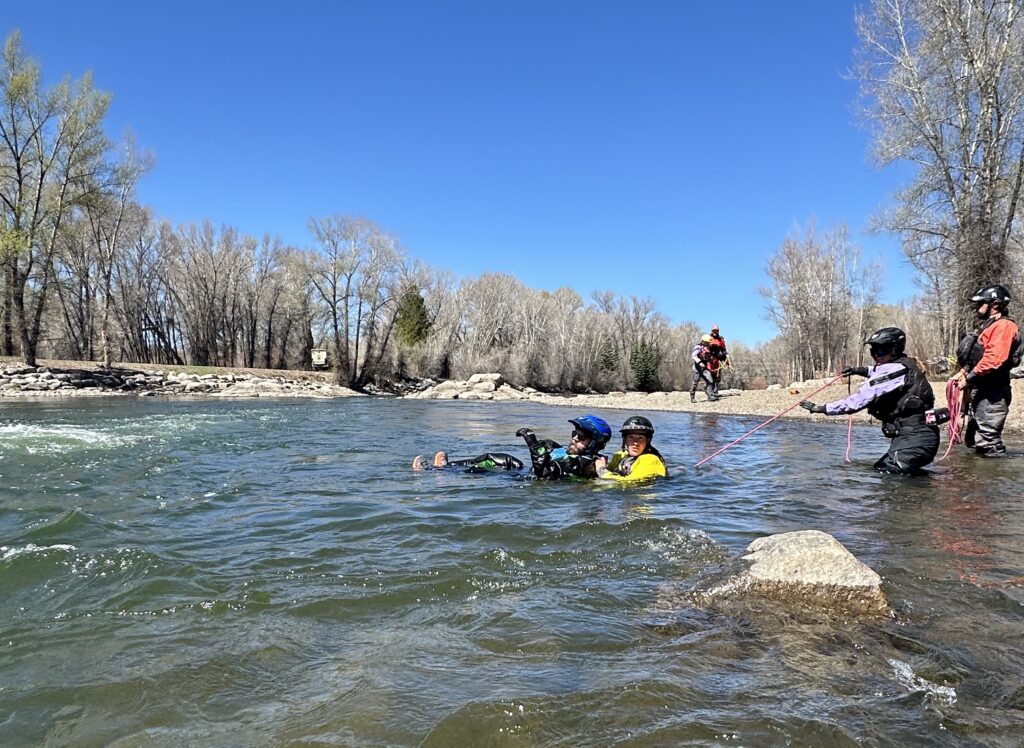
The first day of this swiftwater rescue course we will focus on teaching students how to recognize and avoid common river hazards, execute self-rescue techniques, and execute simple rescues of paddlers in distress. We emphasize both personal safety and simple, commonly used skills. We’ll also teach fundamental techniques for dealing with hazards that carry greater risks for both victim and rescuer, such as entrapments, and pins.
On days 2 and 3 we build on and practice the skills we learned on day one. And we dive into more advanced techniques for dealing with hazards that carry greater risks for both victim and rescuer, such as strainers, rescue vest applications, entrapments, and pins. Scenarios will provide an opportunity for participants to practice their skills both individually and within a team/group context, as well as give guides the opportunity to evaluate your skills.
Overview
- ✅Promote proactive prevention of river accidents
- ✅Develop and practice key self-rescue
- ✅Identify and avoid river hazards by understanding hydrology, hazards, and river features
- ✅Focus on fast, low-risk strategies for early management of river accidents
- ✅Practice methods for recovering swimmers, and loose boats and equipment
- ✅Skills Course Prerequisites
- ✅Acknowledgment of personal compliance with the ACA Essential Eligibility Criteria (EEC)
- ✅Agree to comply with the ACA Code of Conduct
- ✅Develop and practice more advanced rope-based and in-water skills
- ✅Gain experience using the rescue life jacket (PFD), and understand its strengths and weaknesses
- ✅Utilize rescue scene management principles needed within a paddling group
Prerequisites
Skills, Gear, Etc
Four Corners Guides courses are exclusively for packrafters. Paddlers need to be able to competently maneuver their packrafts in Class II rapids, be in good health and overall fitness, possess solid swimming ability, and be comfortable swimming in moving current during river drills. Participants need full drysuits, they should dress appropriately for weather and temperature and expect to be in the water for extended periods of time.
Minimum Personal Equipment for Class
PFD (aka life jacket) designed for whitewater use, whitewater helmet, protective clothing suitable for extended swimming in cold water, protective footwear, boat, paddle, whistle, throw rope, 15+ feet of one inch tubular nylon webbing, and 2 locking carabiners.
Course Duration
- ✅Three 8-hour days
- ✅Course Location: Animas River, various places
- ✅Moving water on rivers rated up to and including class II+.
Detailed Content Summary
- ✅Welcome, introductions, paperwork
- ✅Student and Instructor course expectations and limitations
- ✅Course itinerary and site logistics
- ✅Review waiver, assumption of risk, challenge by choice, medical disclosure
- ✅About the ACA
- ✅Life jacket policy (always wear on water)
- ✅Appropriate personal behavior
- 🟢No alcohol / substance abuse
- 🟢Proper etiquette on and off the water
- 🟢Respect private property
- 🟢Practice Leave No Trace ethics
Personal Preparation
- ✅Personal ability
- ✅Swimming ability
- ✅Water comfort & confidence
- ✅Fitness, conditioning, and warm up
- ✅Safe paddle and boat handling
- ✅Safety and rescue considerations
- ✅Personal equipment (reviewed by instructor)
The Paddling Environment
- ✅Weather conditions and forecasts
- ✅International scale of river difficulty
- ✅Characteristics of current
- ✅River levels and streamflow (CFS)
- ✅Subjective vs. objective hazards
- ✅Effective river/rapid scouting strategies
- ✅River features and hazards
- 🟢Downstream and Upstream Vs/chutes
- 🟢Eddies and Eddy Lines
- 🟢Waves/Wave Holes
- ✅Holes/Hydraulics
- ✅Ledges / Horizon lines
- ✅Strainers: types, typical locations
- ✅Rocks/Pillows
- ✅Cold water immersion/response
- ✅Dams / Flow Diversion Structures / Pipelines
- ✅Undercut Rocks / Ice
- ✅Flush drowning
Personal Protective Equipment (PPE)
- ✅Helmet
- ✅Life jacket
- ✅Footwear
- ✅Packraft and paddle
- ✅Thermal Protection
- ✅Accessories: knife, whistle, food, etc.
- ✅Packraft specific PPE
Personal Rescue Equipment (PRE)
- ✅Tubular webbinga
- ✅Locking carabiners
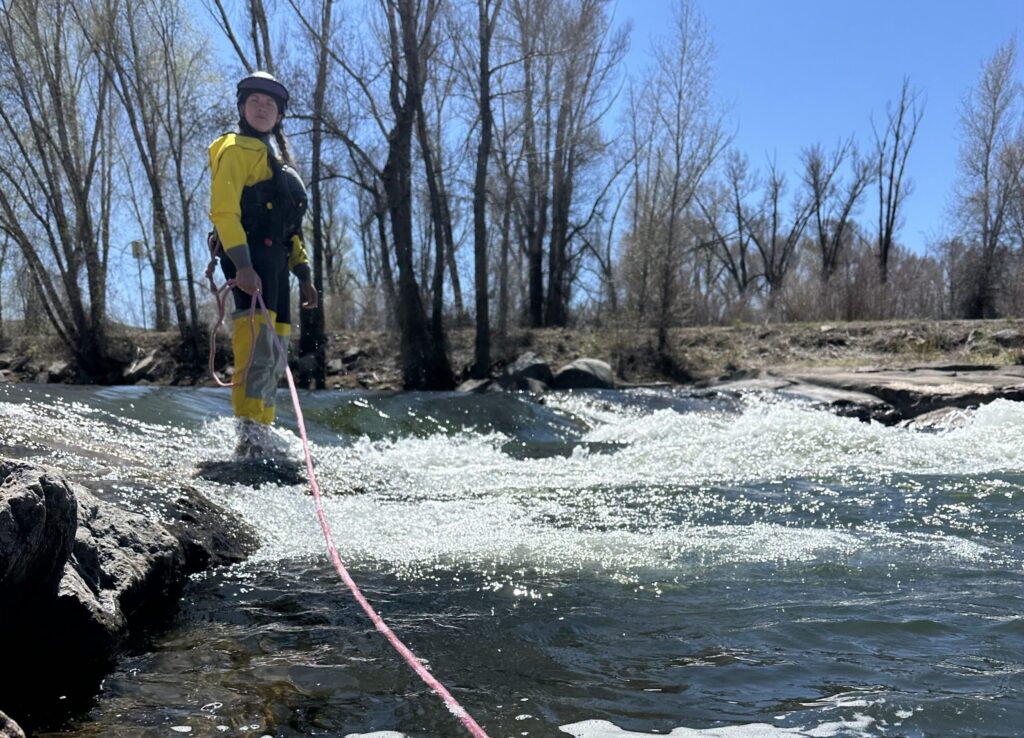
- ✅Throw rope
- ✅Pulleys
- ✅Prusik loops
- ✅Survival Equipment
- ✅Quick Release Harness System (QRHS)
- 🟢Parts, applications, advantages, disadvantages, and hazards
- 🟢Common causes of QRHS failure and prevention strategies
- 🟢Threading options for tri-glide
- 🟢Buddy checks for QRHS
- ✅Rescue tethers: parts, applications, advantages, disadvantages, and hazards
- 🟢Strategies to prevent entrapment: proper stow points & acceptable attachment options for carabiners
Rescue Strategy
- ✅Personal Preparation: swimming ability, confidence, fitness and conditioning
- ✅Strategies to prevent or minimize incidents
- ✅Trip organization and planning principles: float plans, emergency action plans
- ✅Communication: hand/paddle and whistle signals
- ✅C.L.A.P. – Communication, Line of Sight, Avoidance, Position of maximum usefulness
- ✅Incident timeline
- ✅Rescue priorities
- ✅Responsibilities of swimmer
- ✅Phases of rescue:
- 🟢S.T.O.P – Stop, Think, Observe, Plan
- 🟢L.A.S.T – Location, Assess/Access, Stabilize, Transport
- ✅Rescue management: leadership, safety, rescuers, subject (stable and unstable)
- ✅Establishing acceptable level of risk: Can I [do this]? Should I [do this]?
- ✅Liability Issues: duty to act, breach of duty, harm, standard of care, abandonment
- ✅Ethical issues: moral vs. legal obligations
- ✅Medical issues and considerations
- ✅Rescue strategies for common river scenarios:
- 🟢Swimmer with/without equipment in current
- 🟢Paddlers & Equipment on rocks in current
- 🟢Boat pins with/without paddler
- 🟢Entrapment
- 🟢Unaccounted for paddler
Rescue Strategy
- ✅Strategies to prevent or minimize incidents
- 🟢C.L.A.P. = Communication, Line of Sight, Avoidance, Position of Maximum Usefulness
- ✅Incident Timeline
- ✅Phases of rescue
- 🟢S.T.O.P. = Stop, Think, Observe, Plan
- 🟢L.A.S.T. = Location, Assess/Access, Stabilize, Transport
- ✅Rescue Management: leadership, safety, rescuers, swimmers (stable & unstable)
- 🟢Establishing acceptable level of risk: “Can I [do this]? Should I [do this]?”
- 🟢Liability Issues: duty to act, breach of duty, harm, standard of care, abandonment
- 🟢Ethical Issues: moral vs. legal obligations
- 🟢Medical Issues & considerations
- ✅Rescue strategies for common river scenarios
- 🟢Swimmer with and without equipment in current
- 🟢Paddlers & equipment on mid-stream rocks
- 🟢Boat pins with and without a paddler
- 🟢Entrapment
- 🟢Unaccounted for paddler
Wading Skills
- ✅Causes and prevention of foot entrapment
- ✅Formal vs. informal wading techniques
- ✅Factors that impact success in wading: depth, force, composition of river bottom, number of waders, etc.
- ✅Strengths, limitations, advantages, disadvantages, and risks of wading techniques
- ✅Four-point crawl
- ✅Single person assisted wade
- ✅Two-person wade
- ✅Line astern wade
- ✅Wedge wade
- ✅Line abreast wade
- ✅Fence wade
- ✅Tethered wading techniques
- ✅Direct line crossing
- ✅Wading applications for foot/boat entrapments
Swimming Skills
- ✅Strategies to minimize risk of foot entrapment
- ✅Techniques for successful exits from current to eddies
- ✅Defensive swimming position
- ✅Aggressive swimming position
- ✅Defensive to aggressive transitions
- ✅Ferry techniques: defensive and aggressive swimming
- ✅Self-rescue: swimming with equipment
- ✅Swimming techniques for: waves, hydraulics, and drops
- ✅Strategies to conserve energy: short aggressive sprints, “porpoising” for in-water scouting, appropriate timing, etc.
- ✅Managing holes and drops
- ✅Swiftwater entries: in and out of water starting positions
- ✅Techniques for successful downstream swim of a rapid
- ✅Strategies for handling strainers: aggressive swim in and over and log walk
- ✅Non-tethered Swimming Rescue (contact rescues)
- ✅Tethered rescue swimming
- ✅Direct line lower of rescuer
Throw Rope Skills
- ✅Characteristics of throw ropes: rope diameter, length, construction material, and bag design
- ✅Rope management and safety strategies
- ✅Rope care
- ✅Rope hazards
- ✅Throwing and recovery zones
- ✅Factors impacting throw accuracy and success: stationary and moving targets
- ✅Single person throw rope techniques: underhand, overhand, and sidearm
- ✅Two-person throw bag techniques: split bag toss
- ✅Bag re-stuffing techniques
- ✅Advantages and disadvantages: bag and coil throwing techniques
- ✅Rope coiling methods and throw techniques: butterfly and coil
- ✅Rope receiving techniques
- ✅Communication with swimmers
- ✅Techniques for handling multiple swimmers
- ✅Vectors pull to assist with landing swimmers
- ✅Belay techniques
- 🟢Hip belay, seated belay, and back-up belay
- 🟢Dynamic and friction belay
- ✅Pendulum use for crossing current
- ✅Line ferrying techniques
- 🟢Boats
- 🟢Tethered swimmers
- 🟢Messenger lines
Rigging Skills
- ✅Knots: components of good knots, dressing, terminology, strengths, and limitations
- ✅Tie and properly dress
- 🟢Figure 8 family: standard, on bight, follow-through
- 🟢Overhand Family for webbing: overhand on a bight, overhand bend
- 🟢Double Fisherman
- 🟢Prusik Hitch
- 🟢Munter Hitch
- 🟢Clove Hitch
- 🟢Butterfly Knot
- ✅Anchors
- ✅Components of solid anchor points
- ✅Terminology
- 🟢Advantages and disadvantages of anchor types
- 🟢Characteristics of self-equalizing and load distributing anchors
- 🟢Planning for anchor failure
- 🟢One-point anchors: friction wrap, 3 bight, single loop, and wrap 3 – pull 2
- 🟢Two-point anchors
- ✅Mechanical advantage
- 🟢Applications of mechanical advantage in the rescue environment
- 🟢Risk management strategies: scene management and dampeners
- 🟢Characteristics of simple and compound systems
- 🟢Simple systems: 2:1 & 3:1
Packraft Based Rescues
- ✅Advantages and disadvantages during rescues of various crafts: canoe, kayak, SUP, raft, etc.
- ✅Paddle recovery options
- ✅Strategies for boat recovery
- ✅Self-rescue: swimming with equipment
- ✅Swimmer tow options
- ✅Swimmer re-entry/re-mount techniques
- ✅Packraft bumping/bulldozing
- ✅Packraft towing (without use of Quick Release Rescue Harness (QRHS) and tether)
- ✅Tethered craft rescue
- ✅Controlled boat lower
- ✅Packraft specific rescues including pins
- ✅Pin mechanics
- 🟢Types of packraft pins
- 🟢Boat-based techniques for pins
- 🟢Control and haul lines
- 🟢Strong arm method
- 🟢Vector pull and progressive vector pull
- 🟢1:1 with change in direction
- 🟢Packraft specific anchors (i.e., creating anchors on specific craft)
- 🟢Packraft-specific techniques: hull wrap for rotation, raft specific techniques, etc.
Strategies and Skills for Entrapments
- ✅Stabilization and control lines
- 🟢Cinches
- 🟢Characteristics of open, closed, and irreversible cinches
- 🟢One-bank cinches (kiwi & U-cinch)
- 🟢Two-bank cinches (simple cinch, Y-cinch, shrinking loop/lasso, and box cinch)
- ✅Application of cinches for paddler, swimmer, equipment, and/or boat entrapments
Scenarios
Simulated rescue skill development sessions and scenarios will be used throughout the course to:
- ✅Model and utilize effective risk management and rescue strategies
- ✅Highlight essential skills for the course level and venue
- ✅Increase skill and experience level of students
- ✅Maximize learning outcomes for all students
Conclusion and Wrap Up
- ✅Group debrief / individual feedback
- ✅Course limitations
- ✅Importance of First Aid and CPR
- ✅Importance of additional instruction, practice, and gaining experience
- ✅Importance of appropriate level of safety and rescue training
- ✅Life sport / paddling options
- ✅Local paddling groups / clubs
- ✅Handouts / reference materials
- ✅Participation cards
- ✅ACA membership benefits and join process
