Private Packraft Essentials: A Level 2/2+ Paddling Skills Course with Steve
Sold out!

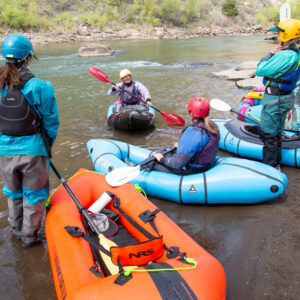
This private, intensive Level 2/2+ course for two people will enhance your paddling skills and advance your whitewater skills. The course aims to deepen your understanding of the Level 1 & 2 Paddling & River Running skills outlined in the American Canoe Association Packraft curriculum, and to provide practice drills to perfect these skills. Please visit our curriculum in the drop down menu below.
Payment in full is due upon registration.
Please review our cancellation policy, which you will find on our Terms, Conditions & Cancellation Policy Page.
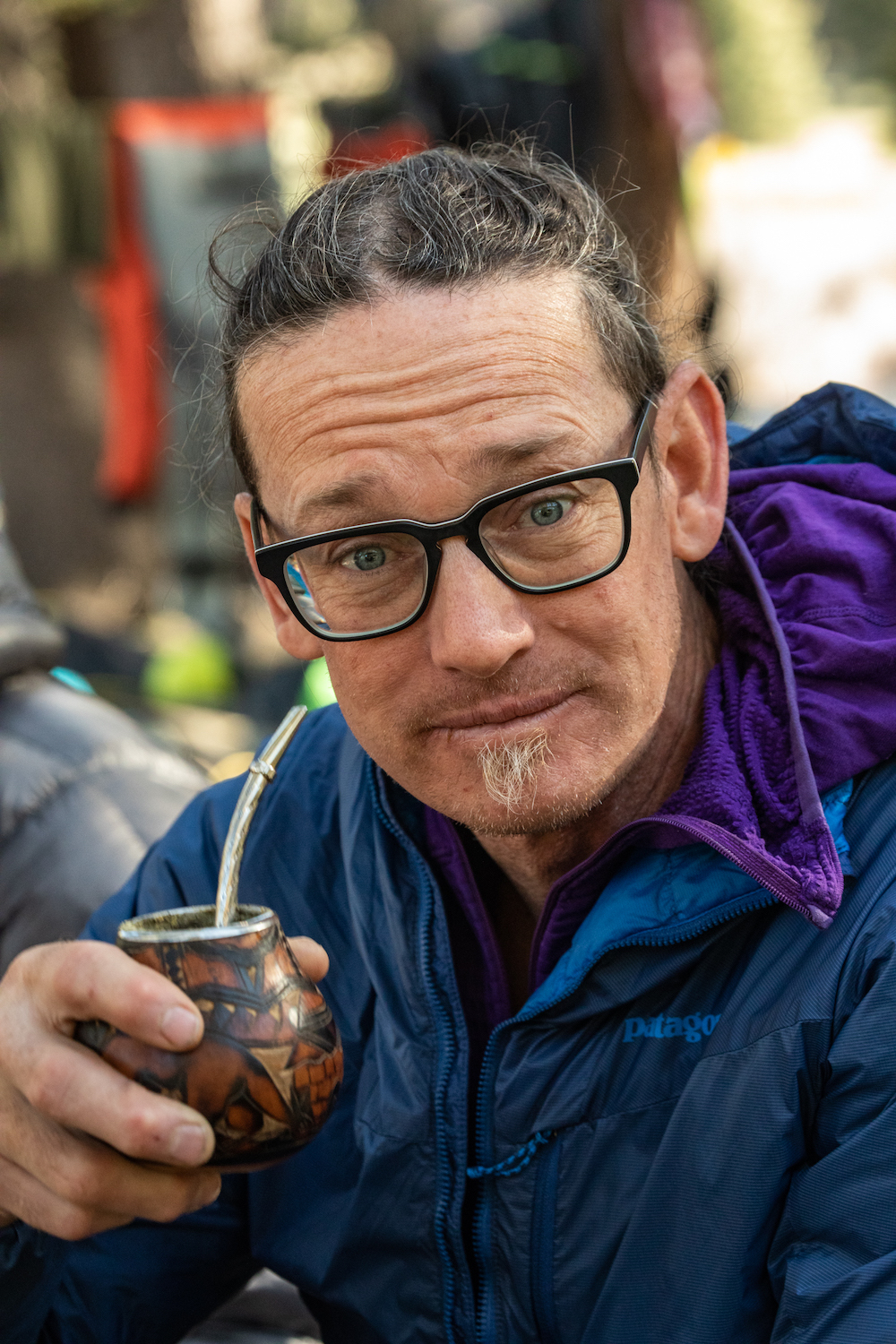
Steve, aka “Doom,” is one of the country’s first Level 4 American Canoe Association Packraft Instructors. He will soon also be a Swiftwater Rescue Trainer instructor. And he is a certified International Rescue 3 Whitewater Rescue Technician Professional (WRT-PRO) and IRF Whitewater Packraft Guide. Steve is also a certified Wilderness First Responder. An early adopter of packrafting, he has guided or instructed bike-packrafting to kids and adults for over a decade. And he has done remote packrafting expeditions around the world for over a dozen years.
Please note you may or may not learn all of these skills. It depends on the motivation and existing skill level of participants, along with the length of the course.
✔Equipment (use and care + boat rigging, fit, and release of thigh straps)
✔Posture, safety, comfort, rocking and balance
✔Swimming and general water confidence
✔Self-rescue & buddy assistance
✔Dealing with currents
✔Aggressive & defensive swimming position
✔River hydrology/dynamics, features & hazards
✔Beginner to Intermediate Paddle strokes: Forward, Draw, Sculling draw/brace, Sweep (including stern draw), Reverse sweep, Rudder, Bracing
✔Maneuvers: Spin: boat pivots in place; Draw Stroke to move the boat sideways without headway; Forward: boat goes forward in a reasonably straight line; Turns: boat turns in a broad arc while underway
✔Ferries: Facing downstream (to stop in current and move laterally to avoid hazards) and Facing upstream to move laterally with control
✔Using eddies: Eddy turns, Deep into eddy vs. near eddy line, Peel outs, Deep into current vs. pivot near eddy line, C-turns (eddy turn and peel out from the same side of an eddy), S-turns (eddy turn on one side of an eddy, peeling out from the other side)
✔Surfing
✔River communication: Paddle, hand, and whistle signals
✔Trip planning – 6Ps: Prior Proper Planning Prevents Poor Performance
★Review elements of a float plan (who, what, when, where)
★Sourcing local beta such as river sections, flows, weather conditions, forecasts, etc. (i.e., online groups, guidebooks, websites, apps, businesses, gauges, etc.)
★Local rules, regulations, and permitting requirements
★Shuttle logistics (where do the keys go?)
✔Evaluate current weather conditions, forecasts, and other environmental hazards
✔Field repair-tips & tricks
✔Strategies in running rivers: Spacing, Avoid tunnel vision, Paddle your own route,. Scouting, Portaging, Group organization on the river, Cohesiveness (lead, sweep boats, etc.), Safety boats (group members with repair kits, first aid kits, and first aid and CPR training), Communication and signaling
✔Discuss danger vs. difficulty
✔Identify and demonstrate the use of appropriate rescue and safety gear for packrafting
✔Responsibilities of the group, rescuer, swimmers
✔Boat-based rescues
✔Group communication
✔Swimming in rivers & water confidence (aggressive & defensive swimming position)
✔Self-rescue & buddy assistance (we re-entry)
✔Rescue priorities: people, craft, paddle, gear
✔Discuss how to avoid and prevent cold water shock, hypothermia, and hyperthermia by choosing proper clothing and recognizing and treating early symptoms
✔Discuss the safety implications of access to remote paddling environments