

Show Summary
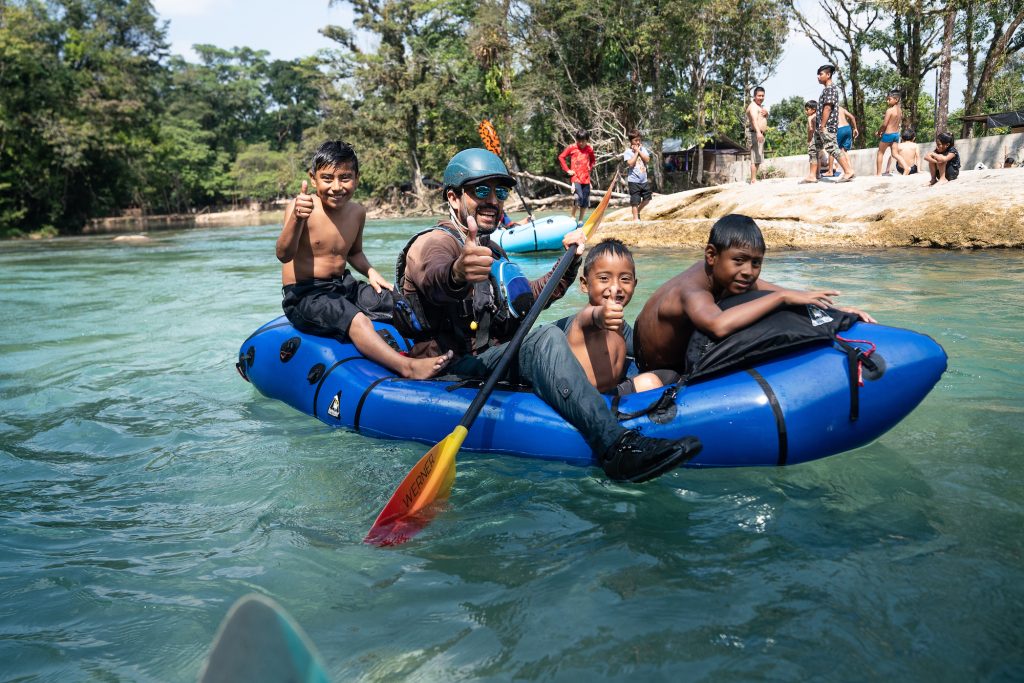
In this episode, Lizzy interviews Rodrigo Alfonzo a Level 3 American Canoe Association Packraft Instructor and Level 4 Swiftwater certified, discussing his journey into packrafting and the significance of La Venta River, including its wonders, dangers and realities. They emphasize community involvement, safety and/or ACA training for local guides and the people living in and around La Venta and the other rivers people visit, and the importance of preserving natural resources while promoting both Mexican and foreign tourism in Chiapas. Rodrigo shares future plans for his cooperative guide service, Packraft Mexico, training local guides and organizing events to enhance the packrafting experience in Mexico. You can also find Rod on @losabuelitoschiapas on Instagram.
INtroduction
Today we’ve got a special episode about one of the most storied and spectacular rivers in Mexico, which also happens to be one of the most misrepresented in social media. I’m here with Rodrigo Alfonso to talk about the wonders and dangers of La Venta River, his work with the Mexican government and environmental conservations agencies to protect the river and make it safer for those who utilize it. We’ll also talk about his latest project, Packraft Mexico, a co-op guide service that strives to both train and employ locals to guide La Venta and other rivers and to bring training opportunities to the local communities surrounding these rivers. Rod won the American Packrafting Association’s Golden Paddle award in 2025 for building the packrafting community in Southern Mexico. He has single-handedly inspired dozens of Mexicans to not only start packrafting, but also get the training they need to work on the rivers they already love and utilize. The guy is enthusiastic, fun to be with and highly motivated. Please meet one of my favorite new paddling partners, the dynamic Rodrigo Alfonso.
TRANSCRIPT
0:28
Yeah. Well, yeah. Thank you, Lizzy. My name is Rodrigo Alfonso. I’m from Chiapas. I was born here and I got into packrafting and a lot of what I’ve seen going on in the world and at the roundups and pretty much I’m living at one of the hottest rivers right now in the packraft community. I was nearby, so that’s how I found out about it. My connection goes, Chiapas goes a little bit deeper. Like I said, I was born here and I’ve been working in hospitality for about 20 years in tourism. It actually was one of the first hostels in San Cristóbala, started in the ’70s by my father. It was named after my great grandfather. So we’ve been here for a while. So and we’ve been actually going to these places and connected to the rivers like early on. So it’s a part of our, I guess, history that we’re doing.
Lizzy Scully
1:28
1:41
Can you tell us a little bit how long you’ve been packrafting and really what inspired you to get into it? You said it was related to the roundup, but where did you first see packrafting ?
Rodrigo
Well, funny enough, I actually saw a packraft in on social media. I was a real popped up on my Instagram and it was a river that I was quite familiar with called. Are you there?
Lizzy Scully
Yeah, yep.
Rodrigo
2:00
2:01
It was quite familiar with it. It was. And I saw it and I was like, well, I recognize that river. It was actually a river that I’ve been going to since like 2010 when I first explored Rio La Venta when I was invited with my friend to go on a conservation trek through the river. So I actually knew the river quite well. When you trek it, you’re pretty much walking every inch of that. So it’s a pretty close, intimate experience. So it’s really good. And then I saw packraft and I was like, wow, you can do that? That exists? I didn’t know that existed and I just felt like knowing what I know about Jappas and I just connected all the dots and I was like, wow, you can explore all these places. I know all these rivers. It can just open up a whole new world and, you know, perspective to enjoy a state where I’m already very passionate about and places I can go with my family.
Rodrigo
And that’s how I got into it. And actually, I was probably not too long ago, like 2023, I actually started really getting into it.
Lizzy Scully
And that’s when you found Four Corners guides online? What was your process of figuring out how to get into it?
Rodrigo
3:04
3:15
3:24
Well, like I said, it’s like all like connecting dots. So I was like, whoa, I saw the social media, dropped my wife to sign off on letting me buy a pack raft. I went on an expedition with my friends that year and I was the only one in the pack raft. And I I had a great time. It was great. And then I was like, I talked to the person, I became friends with the person I saw on social media and I was like, so this is amazing. What else can you do? He’s like, well, if you like it, you should learn about, come to the roundup. So my first step was going to the roundup and I was like blown away. It was really cool. That year, a representative of Rios to Rivers came and it was a really cool keynote speaker and it was really inspiring hearing what they were doing.
Rodrigo
4:20
And fast forward to 2025, about the time we were going to the roundup in July, they were finishing up their whole Full Klamath descent. So it’s like kind of like a full circle moment. It was really amazing to see that. But just going back to that roundup in 2023, my friend actually won in the raffle your book. And I previously, like it turned out,
Another friend was on a trip with you, so I started connecting more dots. I was like, oh, and then I heard, well, you guys were really great. Unfortunately, you weren’t at the roundup, but, you know, as things tend to, you know, do, I don’t know, just the way things try to unfold, we are paths crossed eventually. It was pretty neat that, like, I… I discovered that you guys were in Colorado. I was online looking for, you know, I really wanted to learn more about packrafting. Rodrigo 5:21 Like the first roundup, I was able to take my first course and I was like, whoa, so that’s how you do it. That’s how you do it. And I wanted to learn more. And I was looking at more like an expedition thing because I really wanted to go back to Rio La Venta. But with more preparation, more expedition mindset. And I saw you guys had a course that was doing expedition. It was, I think, the Dark Canyon trip that came up. And I reached out for something. And then you said, hey, are you interested in an exchange? And then you were talking about like maybe coming to Mexico. I don’t think like La Venta was even on the table or even thought right there, but you were talking about coming to Mexico and I was like, oh sure, that makes sense. That makes it so much easier for me. Rodrigo 6:12 We already deal with accommodations here so we can easily exchange that. And I really wanted to go and it just like things started lining up perfectly And like that was about the time where the sidewalk sale was. I got to reconnect with the old high school buddy who was close friends with you guys. And then I found my way to in Colorado, sleeping in a parking lot, getting some pack rats and taking some courses and connecting. Yeah, it was great. Lizzy Scully A lot of serendipity there. Rodrigo 6:38 6:41 Exactly. I think there’s a lot of serendipity, but it just… It’s wonderful when you start connecting with the community and meeting people, meeting the right people, learning how to do things right. I think my approach to things was you got to leave your ego unchecked. You’re not the jefe everywhere. You got to learn from people to do these things. It’s great. I always talk to my dad. He’s like, you know, you got to start at the door. You got to start at the beginning. You got to start sweeping before you get to the top. And so you got to, it’s always a process. So I really enjoyed everything I learned from you guys. I think it started from basic courses and eventually ended up we connected on other courses doing more. Like intermediate and more advanced things together. Rodrigo And it was just a cool process overall to develop. And I think it really gave me a solid foundation for my learning process, connecting with you guys. Lizzy Scully 7:34 7:42 And for us, like, it’s like Jill Harley says, teaching courses is like having a friend factory. So you make these friends with people on the courses and then eventually they get good enough and you get to go do really cool stuff with them. Rodrigo 7:57 Yeah. And that’s inspiring because that’s all I really, I just wanted to learn so I could do cool stuff with my friends. Friends back in Chiapas. So I wanted to do cool stuff and my family, you know, share these places I love with my kids and my wife and friends. And like, it’s true and it does happen. So I have been able to connect with other paddlers and we’ve been doing some amazing stuff here in Chiapas. We’ve been all the way from like Oaxaca to Veracruz paddling around and we’re having a great time. Lizzy Scully 8:26 Nice. Well, let’s move up. I want to talk a little bit about one of the reasons for the conversation. Well, a couple of reasons is to, oh, shoot. Actually, I need to plug my computer in, so hold on a second, Lizzy Scully okay? Yeah, Lizzy Scully 8:45 8:59 so a couple of reasons for this conversation besides just talking to a cool human being who, by the way, won the golden paddle award this year from the American Pack Raffling Association for his efforts to build the pack raffling community in Mexico. But one of the The reasons all this happened was your experiences on La Venta River. And can you tell listeners a little bit about the backstory of La Venta and what your perspective on the use of the river was? Rodrigo 9:31 So yeah, sure. So I started, like I said, I started going there when it was early on in 2010, but paddling is trekking. So that was the first initial introduction to use of the river, people for investigating, people for studying and monitoring. I was just keeping track of all the stuff going on. Most of my friends were biologists or environmental engineers, so that’s how I got into that. So that’s how I first thought about it. Then I did hear about other expeditions in Jappas that were doing rafting down there. Apparently it’s been… I developed, rafted for about 25 years actually. So it’s been around for a while. And then I started seeing the pack raft come into it. So I was like, oh, this is great. I’m going to do, I’m going to try this. Rodrigo 10:28 But like when I first, it was a transition. I did miss one step before, like after trekking, it’s really hard to trek the river, especially when you’re doing like that length and like I decided to upgrade one year and that for me was a river tube, an inner tube. Lizzy Scully Wow. 10:49 Rodrigo 10:50 |
It was kind of tough actually because it was silly of us and dumb of us now that we know about it. And these are things that you don’t really You really know when you’re experiencing it. If things go great, everything goes great. But then until it doesn’t. So one day on another expedition, things didn’t go great. So my friend ended up breaking his leg, a serious accident at this point. We’re well prepared. I mean, we had someone that was a paramedic with us and we had our whole We were able to evacuate. Lizzy Scully 11:29 Could you explain why he broke his leg and where so that people understood? Do you understand that part of the river that’s actually dangerous and how that also could affect pack rafters who go down there? Rodrigo 11:39 Yes? Mm-hmm. Well, the exact location was like, it was in a rapid. It was probably like a class three But why is pretty much because when you’re on an inner tube, you’re sitting with your legs exposed. So as he was coming down a little rapid, it was a drop, and immediately put his feet directly into the water and the power of the water. And the momentum pushed forward and snapped in his lower leg. I don’t know exactly what the name of the bone was, but he required about seven screws to get it redone. It was a pretty significant breakage. But that can happen on any part of the river, I think. I mean, for us specifically, it happened like on the last day. So our protocol there was to evacuate and we know where we had to go. But that could happen anywhere. Rodrigo 12:46 I mean, it’s like the characteristics of a river are pretty consistent throughout. And it’s, you know, like a lot of people come saying, oh, yeah, I want to do a La Venta. But it’s not like a… Typical river that most people go paddle in the US. I still haven’t seen myself on one like that kind of river yet in the US because most of them have more volume. Lizzy Scully You haven’t seen a river like La Venta in the U.S.? You haven’t paddled one? Is that what you mean? Rodrigo 13:11 13:16 Yeah. Yeah, that’s what I mean. I don’t think I have. I’m sure there is out there, but it’s more like a– I would say it’s more consistent with a creek. It’s a more technical. Even if it’s a class three, it’s always going to be a technical class three throughout. And then there is some class four in there. And then it’s such a sensitive river in terms of like I’ve seen it every time I go there. Mostly, like, about my concerns about being on the river is that any river, anytime you go there, it’s so different. I’ve seen it so different, and, like, the levels constantly shift. I’ve been where it’s dry at the beginning, and it’s super wet towards the end, and, like, it’s just so sensitive because it’s a karst, uh, Canyon, it just can receive water from anywhere almost. Rodrigo 14:10 And then there’s underground rivers that just fill up and it’s come. So it’s very, I would say, flashy in characteristics. And the flash floods kind of get you by surprise, you know. But as quickly as they come up, they can also go down. And it’s just amount of, I think, a lot of this info and secrecy or the… The gatekeeping that has been done on this river has led people to be in the, you know, taking unnecessary risks and all this information. I mean, you hear about some river trip reports, but you don’t hear about actually everything. Maybe people hear about like 30% of what actually goes on. Us being in Chiapas, we hear about the other 70% of what goes Lizzy Scully So do you just start talking about the various challenges that the river presents to people who paddle it, from the changing water levels to Rodrigo 14:57 15:07 on. Yeah, yeah. Like I would say like, yeah, like another example is like I was just talking to someone the other day that you, You connected us with together and I was talking to them and she was like thinking of doing an early November trip. And I just want to like, that’s great. People want a taste of water, but I’ve probably seen sometimes in January, I’ve seen more water than you’ll probably ever expect to see in November or February. It doesn’t necessarily mean you’re guaranteed Safety in a certain time of season. So it’s very that’s why I say it’s a sensitive region. It’s a jungle. It’s always going to be raining. But it does it does change a lot and it can be it’s a heads up expedition. So like if you talk to people that have experience on the river, it’s always treated that way. Rodrigo As a solid class four remote expedition. Lizzy Scully 16:06 16:09 Right. And there’s an idea of it that it’s because of how often it’s been shared on social media that it’s actually more a benign river that even total beginners can do. And maybe that’s an inaccurate perception of the river. Rodrigo 16:30 Of course it’s inaccurate. Yeah, it’s actually scary when it becomes that way because like, you know, even for ourselves, for Mexicans, we’re used to being tough, rocking it out there, trekking it and stuff like that. But we know enough common sense that you have to respect nature. And like when you, especially when you’re remote, You’re out there, you’re in a place and that’s not even half my concern. The other half would be most people from the US that come to Mexico get extremely sick. So you’re going to be dealing with GI issues on the river and that. That increase bumps it up like it may be a class or two difficulty in itself. And then you’re going to be dealing with that for maybe two, three or four days on the river. It probably zaps about 40% of your energy. Rodrigo 17:26 And I’ve seen that commonly. Like for me, I’m built up. Like I have the, I guess the bacteria is in my system and I don’t get sick easily. I’ve never been sick on the river. But I do take precautions. I’ve also been a part of a conservation initiative that we tested throughout the river, different parts, different sources, and we can confirm that there are bacteria present on the river, so it’s not quite clean. Yeah. Lizzy Scully 17:57 |
Rodrigo 17:58 So there’s a lot of things that people don’t know that should know, especially if you’re going to be doing that. There’s also some of the most venomous snakes in the country in there. I mean, there’s firsthand stories of people getting stung by scorpions. I’ve seen a lot of bee stings. So you got to be careful for anaphylactic shock and all these things. Other issues that can arise. So people really have to be prepared. And it’s like, even myself, like my first experience on the river, it was probably what you call like a type of class two or type three fun or one of those incidents. Lizzy Scully Yeah. Rodrigo 18:37 18:41 So I pretty much went with one of the most respected areas He’s a very well-known speleologist, guide. He’s been in tourism for many, many years. And when we went on the trip, the variety of the group was so vast At the initial put-in, we already had a group falling behind three or four hours. And then by the end of the trip, we were split off into little pods, and we were pretty much getting out on our own. And I’m just saying that little antidote because for me, it’s like when you put groups together, If you don’t know the background or don’t know the skill set, you know, you could have a large variety and that factors in to being on a remote expedition, especially it’s like you see the pretty pictures and you see like all of a sudden you, it doesn’t match your expectations once you have to hit a rapid and you’re like, oh, it’s not that easy. Lizzy Scully Can you also Rodrigo So I’ve been So I’ve been kind of like figuring that stuff out too and sharing that information. Lizzy Scully 19:53 19:53 19:59 talk about the community element? Like I tell people that if they want to go down there, it’s really important to, I think in my not so humble opinion, it’s really important to go with a Mexican from Chiapas. And I’m curious, do you agree with me? And if so, why? Or maybe you won’t, but… Rodrigo 20:20 Yeah, I mean, it’s great. You know, we see like these seasonal operators coming in. It provides some, it’s great. They’re seasonal, they’re here, they’re developing some local talent. And it’s always great to have like a Local connection. It provides commitment. It shows involvement and provides, I guess, financial benefits to the community as well. So that’s always important to take the communities into account. But it’s also like there’s very few that actually qualify or have the skills to do But I’ve been finding them. They’re out there. Like I said, 25 years of experience wrapped in the river. There are certain guides that have been developed and like the paddlers in Veracruz and the paddlers in like Oaxaca are some of the best paddlers you’ll see in the country. Rodrigo So we just need it. Lizzy Scully 21:19 21:25 But why also would it be important to have a Mexican guide on your trip if you’re doing La Venta, specifically La Venta, but also some of the other rivers, like for access issues or communication or for any of those reasons? Rodrigo 21:35 Well, it’s always good for communication and access. I mean, there’s certain ways. First of all, this is a national park. It’s got the highest category in terms of parks. It’s a biosphere. So it’s very, very important. And that is controlled by the CONAMP. And the CONAMP is protecting our natural resources. So first of all, it does require a permit. It does require permission from them. So a lot of people are just coming in. And it can get kind of annoying when all of a sudden you’re dealing with evacuation issues, dealing with having to get someone out of the river. And like not knowing where people are coming in and there’s no like controlled access. So it gets kind of annoying from their perspective in terms of like dealing with this. And that’s been, I mean, there’s even been like articles and like, I think men’s journal and stuff like you talking about similar issues that’s been out there. Rodrigo 22:40 And it’s a known issue having to deal with evacuations or these issues that can be, They avoided or connected the reserve in terms of getting a permit, giving them an entrance date with a due date, and that would be helpful for safety reasons. And it’s not too difficult to do this stuff. It’s just checking off the right boxes to do it with the right authorities. And they’re supportive if you have the skills, you’ll be able to get access to the river. And then in terms of the community, well, the community, it’s their livelihood. They’ve been working on this river for many, many years too. Lizzy Scully And what are you talking about? Rodrigo So it’s nice to… Lizzy Scully 23:15 23:16 23:17 As far as the community goes, like how is the community in relation to La Venta? Like where, what community and what do they do and where are they in relation to the river? Rodrigo 23:28 |
Okay, so in relation to the river, we’re talking about the Ocote Reserve. There’s about, I think, 42 communities that live along the reserve, and three of them are authorized For commercial access and for doing activities within the reserve. The first one will be at like, let’s say the put in Aguacero. That’s one of the authorized communities. Then the next one is like a little bit closer to Aguacero. And that does visits La Conchuda waterfall regularly because we’ve been visiting these places on our own. They’ve been working regularly for many years, so they’re involved. And the last one is General Cárdenas, which is focused more on Arco del Tiempo and that region. They’re the more prominent community that’s involved in tourism. That’s where most people visit these places. Rodrigo I think they have several thousand visitors a year so it’s like it’s pretty popular destination. Rodrigo Yeah Can you explain El Arco a little bit? It’s like, it’s really famous on Instagram, but maybe just tell us a little bit about it. Rodrigo 24:23 24:32 24:34 24:41 Lizzy Scully well it’s also like well it’s it’s amazing so it’s it’s it’s it’s a magnificent structure it probably has like I think they say around 85 million years old. It’s the largest structure, natural arch with the river flowing through in the world. So it’s, and it’s about some will say around 180 meters tall. So it’s almost about 600 feet. And, and like, I mean, I haven’t explored it so many ways, but like, it just feels like a, And it’s like also a nesting ground for birds. So it’s a significant value for like the ecological perspective. And like just going through that, it’s like one of the most magical experiences just arriving to the article floating through. It’s really beautiful. It’s awe-inspiring. So it’s… And a lot of people want to experience that on their own and experience that feeling. Rodrigo It’s amazing. Lizzy Scully Is that correct? Rodrigo Yeah, that’s correct. They do that. Rodrigo Exactly. Lizzy Scully Is that or tell me a little bit about that? Rodrigo 25:46 25:53 25:55 26:06 26:08 26:11 Yeah. Yeah. So like, yeah, yeah. Sorry. So, yeah. So another of the stories that we didn’t hear about in the news because it didn’t reach national media, but last year a rock fell inside the arco because of the dryness and just the change of the geological features. And it landed splintering out and it ended up injuring eight people. Because of this injury, there was a huge rescue operation that had to be done. And it took them about 21 hours to evacuate the person from the river. And they had a big exposed fracture on their knee. It was a terrible incident. And it showed us that we have to be ready for this kind of stuff anytime. And so what was that? Lizzy Scully Sorry, the community members led the rescue effort. Rodrigo 27:05 27:06 Yeah. They were involved in the rescue, yeah. Some of the key community members were leading the rescue. I mean, there was no way to get a helicopter down, so you had to, community members had to hike the person out, which is a pretty tedious hike if you ever get there. And so from that experience, It decided we needed to do a better response. So from there, the government got involved, which is the Secretary of Tourism, the State Police, the Tourist Police, the CONAMP, and a couple other organizations got involved, and Civil Protection got involved with, and started training local guides at the community to be able to Improve its response time to improve protocols. It was a pretty cool development and I was fortunate enough to be a part of that. Rodrigo 28:09 I was invited on behalf of the Econamp and I was a part of that whole rest effort. And the result was it was better protocols instead of a 21 hour response. Once time and evacuation, it was down to now seven and a half hours, roughly. And so it’s a huge improvement and we were able to also support them. Finding that, like I was down there and like the mayor of Sintalapa, which is where this whole Thing is located. He was down there. He had a Starlink. That didn’t work. And what ended up working was my Garmin. And so they were like, wow, that’s amazing. I was able to get a response message without seven minutes and it just made sense. And I was able to, I was in a position, I was able to donate one of those to the community and just to be able to give them a A better tool to improve their response time and communication . Lizzy Scully 29:07 I want to bring this back to like if US residents are visiting Mexico, specifically La Venta, there’s a few key things to consider. One is to go through the reserve, but two, I guess back to this, like having someone local to work with When you do the river is important on many levels, not only to be communicating about permits with the reserve, but also to be able to communicate with these communities. So like the community, so someone knows that you’re down there. So if you have an accident, then the rescue can be initiated or something like that. Does that make sense? Is that sort of… |
Rodrigo 29:46 It does make sense. I mean, when you’re in a backcountry, you want to be able to have always an evacuation plan. Like, let’s say if it does rain or let’s say if someone does have an accident, you need to be able to connect to one of these communities. And there’s very few that are capable of actually rescuing Or mounting a rescue, but they’re pretty much the first responders. So you want to be in direct connection with them if you can, because it’s going to be really your first response to get any sort of aid, attention in the river. Lizzy Scully 30:22 So tell me now, I guess I want to talk about your, you’ve done all this training, we’ve done trainings with local Chiapans, like training them in packrafting and instruction. And Packraft in Mexico, this new effort that you have, is this, tell me like, what are your goals with this? Rodrigo 30:44 I mean, it’s cool. It kind of just started talking with friends, paddlers. It’s interesting, like everyone approaches things differently, but they all we all have this connection with nature, connection with outdoors, connection with like love what we do. And there’s there’s people that want to are committed, you know, to building community to show and others and like one of the main I would say barriers that we face in Mexico for these kind of trainings, these opportunities that we can get with getting proper training and a foundation to share this is instruction. And so our first goal was to get people that knew how to paddle, get them to Take instruction and we were able to do that in 2024. We were able to get three from JEPA, three certified ACA Swiftwater instructors, which is great. Rodrigo 31:46 That was a good start. And then with Jim Coffey, so if people know who Jim Coffey is, he’s pretty much a legend in the Swiftwater world. So he’s a great connection. He’s been He’s been from the early days of the paddling scene around 30 years ago in Mexico. He’s been around the block a little bit, but it’s always great to learn from the people that know. We’ve got that step down to be able to share knowledge and share All right, you know, we have these communities where we’re benefiting from their natural resources, but they’re not always involved. Like some places like Canada de Cárdenas, they’re directly involved because now they’re benefiting directly with the tourists going down there, but they still have opportunities and These opportunities can be achievable if they’re able to get the training, which is now accessible here. Rodrigo 32:46 We’re able to train them, we’re able to share the river, share better safety techniques, share river focused safety, which is important because if you’re especially if you’re working near a river, you got to be able to know what’s going on and you got to read The different changes, shifts, the weather. Lizzy Scully 33:06 So your efforts to create the entity Packraft in Mexico One of the goals is to get more training, not only for folks around you to be guiding on LaVenta, but just in general for community members to get more safety experience and more safety training. Rodrigo 33:26 Yeah, it kind of works all together because, I mean, what’s the benefit if, let’s say, Aguasul sometimes has up to 5,000 visitors on a weekend during vacation? I mean, of course, some people aren’t going to know how to swim, but what if you have the people working in the safety in the community know how to use a throw rope? I’m not sure if you’re a little bit of a Okay. Okay. Lizzy Scully So I really want you to tell me what Pacraft in Mexico is about so that people understand specifically what this new entity that you’re creating is about. Rodrigo 34:22 34:32 So, well, PacRaf Mexico is like pretty much worth We’re trying to be a local operator to create these benefit expeditions and courses to be able to share knowledge with not only just local guides but anyone wanting to do this. Pack drafting is so new in Mexico but we all see the pictures. We’re all excited to do these things and we want to give that opportunity to be inclusive for Mexicans to also be able to enjoy the river. So we’re trying to be that person with Pacraft Mexico. We’re trying to be that opportunity for other Mexicans to be able to go to enjoy Pacraft and other Mexicans to maybe get inspired to buy their own Pacrafts. It’s already happened. We already have like five people that bought Pacrafts in Chapa. So people do want to get into it. Rodrigo 35:22 And then we want people to also develop as leaders. So there’s opportunities to become guides, opportunities to find work. This is all going to be beneficial for the local economy if we’re able to develop this in-house. And when people visit, ensure that most of the economy, the financial benefits remain in Mexico, which is going to be huge. Lizzy Scully 35:44 So you’re so it’s a it’s an it’s basically a sort of you talk about the co-op guide service. So it’s a guide service where you’ll provide opportunities for locals to learn how to packraft. But you also can provide guide services for people coming from other countries to do these rivers so that those people have the local connection and somebody who speaks Spanish and somebody who has safety skills. Training and somebody who can show them the river basically. Rodrigo 36:16 Exactly. You know, it’s hard to tell on the internet who you’re going with. So it’s like sometimes it’s just like, oh, the pictures are attractive. So we’re just trying to be transparent in the fact that who we are, what we have in training, our connection to the river, our connection to the culture, what we try to offer. So we try to be genuine. We’re We all live in Chapa. There’s other people that live in other places in Mexico that have genuine connections to their land and interest in having people have a good time and sharing our culture with them. It’s built in our DNA being hosts. We love it and we try to develop it so people know that we’re here. We can help you guys build We can add value to your thing. Rodrigo 37:06 We have English. |
Lizzy Scully 37:07 Is that what you mean? Rodrigo 37:09 Yeah. Well, to your experience. I mean, if you have it, it’s like pretty much anywhere you go, if you can, there’s a difference between being like a traveler when you connect to the local ecosystem and you know locals and you get to these local spots. Which is something that we can offer, or people that just come visit, they’re kind of one and done, they check it off their list, and there’s no connection there whatsoever. So, I mean, there’s ways that people, you know, I want people to fall in love with Chiapas. I guess we’re kind of like ambassadors of our state here. Lizzy Scully 37:44 But it also seems like the no connection, the problems with the no connection can be pretty significant because if you have no connection, then you don’t have a connection to the communities around I guess from my experience being down there and working with you, it seems like it could be really sketchy for people to just go down there and organize a trip and not have any connection whatsoever to somebody in Chiapas that knows what’s going on on any particular river. Rodrigo 38:25 Yeah, it can be sketchy. I mean, I wouldn’t go to anywhere in the world and not try to connect with the local personally from my experience. Yeah. So, I mean, that’s something that it just kind of common sense. I mean, we want to kind of do things our way, but you know, we have some rules here in Mexico. We love sharing it, but there’s some rules. And, you know, it’s just for safety. You know, we want people to have a good time, enjoy themselves. It’s open. You know, it’s recreational activities are welcome. But let me just tell you quickly, like, I told you back in, like, February, like, a couple years ago how there was an accident on one of these mountains. There’s a bunch of, like, what reserves were I want you to do is find the right guides. Rodrigo 39:11 Like there are people who want to go to Pico de Orizaba. It’s such a tempting mountain. And some people have done it a few times and they say, okay, well, I’ve done it a few times. Let’s bring a group. And what happens, you know, they might get lucky once, they might get lucky twice. But then one of those times they didn’t get lucky and about eight people out of the 10 died. Because they didn’t read the weather. They didn’t check it. And something similar just happened if you look at the news on the Nevada de Toluca, April, I mean, August 10th of this year, a similar accident. Like a lot of people go there. So what happens? The community is set up like they’re, oh, we’re guys. We’re going to set up like a, We’re going to take you up to the top. Rodrigo And that just happened. Lizzy Scully Oh, Rodrigo 40:16 40:16 40:17 So now one of the most popular mountain hiking destinations has just been closed by the CONAMP. So that’s a risk that is very real that does happen in the Okote Reserve. The biosphere is run by CONAMP. So if we get enough people coming in without paying attention, without letting them know, and just one of those times they don’t get lucky, that could be enough to get the reserve to close it down for access, and that could affect people’s livelihoods. It could affect the local economy. It could affect recreational paddlers. It could affect a lot of things. So it’s just not just take that into account because it does happen. We do have a history of that happening in Mexico. It’s not made up. You can look up the news. And so it’s just important to be aware of that, you know, just respect. Rodrigo Respect what it means to be able to enjoy something. Lizzy Scully 41:16 41:18 wow. So all the more reason it seems like to have an organization like Pacraft Mexico that can vet guides, that can ensure that communities have training, that’s basically working as a hub …in Chiapas and Yucatan and Oaxaca, and that is part of Mexico to ensure safety of both locals who want to experience their local river and visitors. Rodrigo 41:50 Yeah, it’s pretty much we’re trying to do that because like we said, we want to keep the river not just for commercial purposes. We wanted to have it recreational purposes like Mexicans deserve to enjoy their Natural wonders too. So we want that to be accessed. I mean, people are welcome. You have the skills to come to Mexico and paddle these rivers, you know, the paddling community and Veracruz like thrives on that. It’s one of the biggest like paddling destinations that’s been around for many, many years for winter paddling. So it’s great. Everyone’s welcome. Just be aware, like if you do have to, Not the skills that you might say you have or think you have, you know, just the river is not going to bend over to your ego. Lizzy Scully Ah, Rodrigo 42:36 42:39 It’s going to do what it wants. And, you know, trust me, you know, you might be granted safe passage once, but just, you know, be aware. It’s a A lot of it can happen as more people try to come here and it’s becoming easily accessible for packraft and do that. Like just little details that need to be taken into account to prevent anything. So we’re trying to get the word out, tell people what it’s about. There’s a season that’s authorized by the CONAMP, which should be Respect it because that’s when there’s people working on the river, there’s people that can help you for evacuation. So it’s good to be aware that it’s between November 15th and May 15th. Lizzy Scully okay. 43:22 |
Rodrigo 43:23 Before then, there’s probably likely going to be a lot of water. And after then, it’s going to be May, it starts raining again. It can change. We just went through a dry spell right now. So it’s probably actually runnable in a pack wrap, but you only know that if you’re a local. Lizzy Scully 43:43 All the more reason to connect with a local. So as far as Packraft Mexico goes, what are your short-term plans to develop it? And then what do you hope for starting in 2027, for example? Rodrigo 44:00 Okay, well, short-term plans. We’re trying to get more people on board. Like people interested. So we so like I said about like 2024, we were to get some instructors certified by the ACA. So check this out. So this year we have 20 people signed up for the first ever kayak and packraft ACA level four courses. Ever in Mexico. So imagine this ever in Mexico. Paddling has been here for 30 years and no one’s come up with this. But I understand why it hasn’t because we’re faced with barriers. We have travel, cost, visa, language. I’ve been utilizing, I know Mexico has a lot of attractive things. People want to come here for the biking, for the climbing, for the pack rafting. So I’ve been able to find people that are willing to come as ITs and come to Mexico. Rodrigo 45:02 So we have our first course coming up in November in Veracruz and it almost filled up, like one group almost filled up instantly. So the tricky part was, okay, well now I got to get women involved. So we were able to get three women leaders, like female leaders involved. One is going to be probably one of the youngest female instructors in Latin America . Lizzy Scully Oh wow. Rodrigo 45:22 45:24 She’s barely 18. Yeah. She’s a tremendous paddler though. She’s been, these people, like they’re born on the river. They didn’t paddle in for like so long and like they’re highly, highly capable. It’s pretty cool. And then we have people from paddling communities of San Luis Potosí, which is another hub that they’re coming. And Chiapas, we’re bringing a small crew from Chiapas up to Veracruz. Lizzy Scully Who’s going from Chiapas? Rodrigo 45:48 45:52 Well, it’s going to be myself. I’m going to be helping out as an assistant in the instructing course. I’m going to be doing the translation. So I’m going to be English to Spanish. And then Jeanette’s going, Jera’s going. Lizzy Scully Is 46:05 46:09 Rodrigo And Adam, he’s going from Chapa. So there’s going to be a good little crew of us going from Chapa. Mostly focused on kayak, but that’s okay. I mean, kayak’s great. I mean, that’s what we’re more experienced in. And we’re gonna get hopefully two Pacraft instructors going. Lizzy Scully Hera going to do pack rafting or kayaking? Lizzy Scully Oh, Chiapas. I hope he does. Rodrigo 46:28 46:36 46:40 Yeah, hopefully it’ll be great, but we’ll see. And so we have those confirmations already as a swamp. It’s going to be awesome. I’m excited. So the first step for me would be just like we already negotiated like a fair price for all the guides. We’ve been saving. We’ve been working on this for like a few months. So we’re saving for it. And like the instructor is so stoked. I’m coming down to Mexico. We’re going to have a great time. We’re going to be doing all the rivers there. Lizzy Scully Is Jim Coffey or who’s the instructor who’s coming down? Rodrigo 47:08 47:12 No, it’s not Jim Coffey. It’s an acquaintance of Jim Coffey, actually. So Jim Coffey is also playing a behind the curtain kind of support role. He’s offered some accommodations for us to be able to stay at his house. So that’s a great move. So he’s really supportive of this. He’s also like I would say like it’s pretty cool because he’s been the leading for the safety. He’s been getting the first and second generation of this swift water safety instructors going in Mexico. So now we’re going to combine and now we’re going to get the first generation of kayakers and pack rafters and coming in here. So if you look on the ACA If you look at the website for instructors in Mexico, you’ll see zero, but if you look in November, you’ll probably see around 15 kayakers or 18 kayakers should appear if we all pass the course. |
Rodrigo 48:19 Yeah, yeah, yeah. Lizzy Scully It’s okay. Rodrigo 48:31 48:31 You know, it’s fine. But what we’re trying to do is like, you know, of course, we’re hoping that you guys come down again. I feel like all the value that we’ve received from Four Corners and like when we talked about it from the very beginning, it was always like a transition of leadership or ownership. And that for me is one of the most important. Genuine ways to approach these kinds of concepts, you know, like share rivers, share knowledge and we love it. Lizzy Scully Can I actually interrupt you? Rodrigo And so for me, we, yeah, Rodrigo yeah. 49:00 49:01 49:10 49:10 Lizzy Scully folks down. And then the idea always was that we would train enough Mexicans so that we won’t come down there anymore and that you will run your you will start to run all the courses that that we’ve run for the it’ll be three years running. Is that what you’re talking about? Rodrigo Yeah. Okay. Lizzy Scully 49:38 49:39 He’s actually, yeah, no, we have three people signed up and we’ll just run it. And then I don’t know if we’ll do another locals course because Steve wants to go and climb that thing. So that will be the week out. Rodrigo 49:52 Yeah, we’re gonna do that. We’re gonna do that. But yeah, it’s great. I mean, it’s really been like a solid foundation of what we learned and like going with Steve to be on Expeditions, it’s just, wow, a master. It’s like amazing. Rodrigo Yeah. 50:17 50:17 Lizzy Scully You have to go. I’m sorry. Hey, go? No, not yet. Later. Okay. Sorry. He really wants to go on a walk. Okay. Sorry. So you don’t mind. So I can still just, if we have inquiries about people who want to pack up to Mexico, I can send them to you. And do you have some guides that can potentially be hired to go with these folks? Rodrigo 50:41 We do. I’ve explained to people that we’re kind of like just full in November. We’re not going to be around in November because we’re going to be taking the ACA courses. That’s like our number one priority. But we’ll likely start after November. We’ll come back to chat us with hopefully with our instructor credentials and then we’ll be able to continue to We’ll be here and there’ll be a few of us, so not just myself or Jeanette, we’ll be a few more. So there’s lots of options and people that love the river. So that’s the main thing, you know, love the river, love Chiapas, the deep connection here. So we’ll be around to be able to do that. Rodrigo Yeah. And starting probably in 2026, they’ll be Be able to find guides through you to help them get down the river. Lizzy Scully 51:22 51:32 Yeah, Lizzy Scully 51:44 |
Rodrigo 51:45 We’re friendly. We know where the best tacos are. But yeah, we’re here. We’re going to be available. We’re going to be doing some training runs in like November and probably early August. So we’re gonna be doing some training on the river with some of the guys. So we probably have like options for people to join us on those trips. And those will all are, like I said, we’re trying to do a co-op, but we’re also trying to use the resources that we gather to accelerate our training and we’re Put it into like growth funds to support communities. We’ve been able to donate, like I said, garments or throw ropes and all these things. So all these things are helpful. So anytime someone comes in, you’re not just supporting like a local company, but you’re also supporting the future of paddle sports in Mexico. Rodrigo So yeah, Lizzy Scully 52:39 52:41 So will you run courses that US folks can join and then the profits will go back to they’ll pay for the guides and then some of the money will go into paying for training and the money will go to community, that sort of thing? Rodrigo 52:56 exactly, exactly. So we’ll all share in the profits. We’ll all have skin in the game, as they say, and we’ll be able to, Enjoy that. This will help us, you know, get gear, help us, we’ll be motivated if we’re all on the same page, we’re all equals, and we’ll be able to also put it towards, like, one of the things that we want to do is save a percentage to give free courses, and these free courses will be, like, donated to, like, communities that we’re visiting so they can get trained. And we have interest in like Agua Sur and it makes a lot of sense, you know, what are these local communities like it makes sense for us, but it makes even more sense for like the local community is that directly on the river. I mean, remember, Juanma is one of the leaders in the community. Rodrigo 53:41 He says, you know, why are they so good in Veracruz? And we’re with this river. We’ve been here our whole lives. We grew up here. I’m like, well, First, you haven’t paddled. But second, like you haven’t had people that want to paddle and now we’re here and we want to teach you guys and we want to work with you guys so you guys can develop these skills and be able to do that. And just by briefly doing like I’ve done with some with like courses with like three or four repetitions. Now they’ve been able to we’ve done this new route. That takes you to these beautiful waterfalls, like some of the most epic waterfalls. And now they’ve been able to gain skills. They still haven’t done it paddling, but they’ve been able to access it and share that section of the river with people. Rodrigo 54:28 So it has become an economical benefit for the community. Almost immediately. And we want to see that grow and expand and we want to see them to have more packrafts in Chiapas. It’s a good idea. More packrafts, yeah. Lizzy Scully So, I mean, you single-handedly have brought like 20 down. Rodrigo Almost. We’re 17. We’re 17. But we’ll get to 20. We’ll get to 20 this year. Lizzy Scully Oh, does that also, can people rent PacRafs from you? If they, or is that going to be a part of the, like they have to sign up for a course? Rodrigo 54:42 54:48 54:54 55:02 Well, for… So like I was saying for like Mexicans, like for coming, like for Mexicans and being inclusive, we’re going to include pack rafts for them because we want to make it accessible because not all Mexicans are able to have pack rafts. For people traveling, we encourage them to have their own gear, but we will rent a pack raft. But on that note, like, yeah, just like full disclosure, like, La Venta is rough on the boats. It’s rough on the boat river. So like we’ll do that with discretion. We’re not like we want people to have their own boats, you know, be familiar with their rigging. It’s always better to know what you’re using and what you’re doing. We do have good boats. We do have very good quality boats, but we want We want those people that have their own boat to bring them down. Lizzy Scully 55:54 I feel like if people want to do LaVenta, they should one, hire one of your guides and then, and only, you should only rent PacRafs out to people who actually work directly with local guides because otherwise you can’t guarantee that your boats are going to come back in good shape, especially if they don’t know how to pack raft, Rodrigo 56:14 Yeah, exactly. That’s smart. Yeah, we could consider that because it’s expensive. It’s hard to get pack rafts here. I’ve been creating a mule system. We have mules people that are willing to bring our stuff down. So if anyone wants to be a mule, you’re welcome. We’ll give you some tacos. Lizzy Scully right? Hey, Rodrigo 56:35 56:36 But like, no, just like that’s another huge barrier. Just getting pack rafts here in the country, like they’re automatically, if you get it shipped, you’re paying like tariffs, importation. So you’re paying like about 20 to 30 percent more. So that’s a huge advantage. I mean, imagine in America it’s already an expensive item and here it gets 30% more. So that’s why I’ve made the most of my trips, you know, getting all these pack rats back and fortunately it’s been working, you know, it’s been great. |
Lizzy Scully 57:11 is there anything I haven’t asked you that you want to share with me about? Oh, I guess you could tell me about your idea. No. Do you want to tell me about the idea for having a roundup in Veracruz? Rodrigo 57:22 Yeah, yeah. So I kind of like thought about it when paddling with Kent Ford and I was like, well, you know, we have class two section, class three section, and we have this class four that’s amazing here. And like, it just makes sense in the river, like one of the cleanest rivers I’ve ever been on, like pretty close by. And it’s like, it’s all within easy distance of this one community. And then what, This one community is just like centralized around like paddling, whether it’s rafting, kayaking, and it’s just like so awesome. The community is such a cool like feeling to be a part of it. And I was like, figured like, you know, this could make sense. You know, it’s easy to get to from the U.S. It’s about four hours away, Mexico City to Jalapa. Rodrigo 58:13 And Jalapa’s about an hour away from this town I’m talking about. And then you’re able to get, like the one thing that they have in the roundup, that’s kind of cool. It’s all centralized at a camp thing, but I think to make it more like our style, you could have people contributing to like the local economy and staying at the locally owned hotels, eating at the local restaurants, which is, The best food, some of the best food is in this town. It’s amazing. Like I would just travel there for the Tempispis. It’s like one of the best things and they’re only like five to seven pesos. You gotta like, it’s only in, they’re only sold in this one town. They’re epic. It’s called Tempispis. It’s these little fried things with, with spicy beans on the inside. Rodrigo 58:58 And it also uses a, I like a leaf of a special avocado that’s called the Citz avocado. So it’s very, it’s a tasty treat. It’s a snack. They’re like average five to seven pesos. So they’re so cheap. And like, I could just eat those all day. And then you have the antojitos, which are the snacks are just amazing. It’s just, I just, that’s why I would encourage people to have a good time and eat the food, you know, and like enjoy. Enjoy the community and stay at the hotels, accommodations are very cheap. And what could make it different is that imagine like we just had the ACA instructor courses going on. So all these people will have the preparation, have the background, and we can hire a bunch of like local guides to I was able to first hand experience paddling with some of them and like, not only makes you like a better boater, it gives you like more confidence. Rodrigo 59:59 It’s a very, it’s a quicker path to enjoy the rivers. You can do like two days. Sometimes you can do like really long barranca grande or like an overnight. It’s just a great way to connect to the community. And now instead of like hiring like an outfitter, you go directly towards the community. So we could do that. We could make it a true local experience, you know, instead of giving the tourist prices, we can get the Mexican prices. And I think it would be good for like a select few to come And see what Chiapas is about, help ****** the Pacraft community love, enjoy the rivers, meet the paddlers, support the community, and yeah, enjoy the rivers. Lizzy Scully Do you think you’ll try to do this in 2026 or do you think it’s a couple of years out? Rodrigo 1:00:48 1:00:52 Yeah, I want to do that. I want to do that. I’m pretty obsessive about things. I’ve been very dedicated to try to do this and go on very, very building skills, doing all these things. Lizzy Scully No. Rodrigo 1:01:01 1:01:07 And I think, I’m not trying to do something big, but I think if something was like 20, 30 people, I mean, I have enough boats here in Chattanooga. That we can get like 10 people even from Jeppes to go up there easily. I mean, everyone wants to go to Veracruz that likes battling. Lizzy Scully Well, just so you know, Steve wants to go after his trip with Burr, which would be February 8th through the 14th or 15th. Rodrigo Like that’s it. It’s a world. Lizzy Scully 1:01:26 1:01:27 1:01:37 So if you want to schedule the roundup. Sometime then, then I’ll probably come down here because we wanted to go to Veracruz in December, but it actually turns out that the boating opportunities are better. It seems like in the January, February. So anyway, that’s it. We might do. Rodrigo 1:01:52 Well, that would be amazing. Yeah. So that was definitely thought of when we were talking about that. So I think we’re trying to line things up to, of course, I would love to paddle La Branca Grande with Steve after reading his trip report. I was obsessed with that river. It’s beautiful. We’ll have a great time. I want to time it so that works for everyone. And I think February works well. It’s a good friendly season for everyone to enjoy class two to class four rivers. Lizzy Scully Cool. Let’s talk about it. Is there anything I’m not asking you that you want to share with me with our last couple of minutes? 1:02:28 Rodrigo 1:02:37 |
Rodrigo
Yeah. Yeah, you too, Lizzy.
1:04:22
Not sure. I think we talked about that. But like I said, we’re going to try after February, we’re going to try to do some trips on our own. And like probably schedule them in April. I think it’s good to have an option that, you know, reliable guides. And so if people want to check out our website, we’re still tweaking it a little bit, but we’re going to have some of our schedule up there. Right now we haven’t mentioned anything about February or the roundup, but we might do our first February trip after February. After the roundup, if it happens. So that’s our goal.
Lizzy Scully
1:03:15
Well, that’s so awesome. Thank you for chatting with me today, Rodrigo. I’m sure that people will be really interested in this podcast just because everybody wants to go to Mexico in the winter in Packraft.
Lizzy Scully
Off the record, do you want to put an order in?
Rodrigo
I love it.
Lizzy Scully
Because I’m going to be ordering some soon. 45% off.
Rodrigo
Yeah.
I’ll help you out.
Rodrigo
Thank you.
Lizzy Scully
Well, thank you again. And I’m sure I’ll be talking to you soon.
Lizzy Scully
Tell the family I said hi.
Rodrigo
That’s so awesome.
Lizzy Scully
I don’t get to talk
Rodrigo
Yeah. Ah, still a week off. Yeah, that’s great. That’s great. Yeah, say hi to Steve.
Lizzy Scully
to them. Have a good day.
1:03:35
1:03:37
1:03:41
1:03:53
1:03:54
1:03:57
1:03:58
1:04:06
1:04:14
1:04:16
1:04:17
1:04:21
Lizzy Scully